Last reviewed: September 27, 2026. Checked against the current text of California Vehicle Code §26708 (California Legislative Information). Subsection references below point to that section.
Legal tint by window
| Window | What the law allows | Where it says so |
|---|---|---|
| Windshield | Transparent material at the top only, with its bottom edge at least 29 inches above the undepressed driver's seat. Not red or amber, no opaque lettering, no more glare than the untreated glass. | §26708(c) |
| Front side windows | Only clear, colorless, UV-A-blocking film with at least 88% visible light transmission. Glass plus film must still meet the federal 70% minimum (FMVSS 205). The installer must provide a certificate. | §26708(d) |
| Rear side windows | No darkness limit | §26708(b)(4) |
| Back glass | No darkness limit, if the car has outside mirrors on both sides giving at least 200 feet of rear view | §26708(b) |
| Any window, medical | Clear, 88%+ UV-blocking film with a licensed dermatologist's certificate | §26708(e) |
What VLT means, and why the front windows are strict
VLT (visible light transmission) is the share of visible light that passes through. California sets two tests for the front side windows. First, the film itself must be clear and colorless with at least 88% VLT. Second, glass and film together must meet the federal minimum of 70% under Federal Motor Vehicle Safety Standard 205. Factory glass already blocks some light, so a film that would pass on its own can still fail once it's on the glass. A reputable installer meters your glass first.
The windshield: 29 inches, not "4 inches"
Many shops describe the legal windshield strip as "the top 4 inches" or "down to the AS-1 line." Neither appears in the statute. Section 26708(c) sets the actual test: the strip's bottom edge must sit at least 29 inches above the undepressed driver's seat. The strip also can't be red or amber, can't carry opaque lettering, and can't reflect sun or headlight glare more than the untreated windshield. On most cars that leaves a narrow band at the very top. If you want a sun strip, have the installer measure from the seat.
Medical exemptions
There are two separate exemptions. Under §26708(b)(10), a licensed physician and surgeon or a licensed optometrist can certify in writing that you need to be shaded from the sun. That allows sun-screening devices on the front side windows, but not during darkness, and the letter must be in the car or on you. Under §26708(e), a licensed dermatologist can certify that UV exposure would harm a medical condition. That allows clear, UV-blocking film (still at least 88% VLT) on any window. Neither exemption allows dark film on the front windows.
Tint tickets
Tint violations are equipment violations and are often written as correctable "fix-it" tickets. You remove or replace the film and get proof of correction by the deadline on the citation. Fees vary by county and rise if you miss the deadline. If your front windows are too dark, tint removal is the fix.
How to stay legal and still beat the heat
- On the front side windows, use only clear film rated at least 88% VLT. Some ceramic films come in clear, high-VLT grades that block infrared heat without darkening.
- Go as dark as you like on the rear side windows and back glass.
- Keep any windshield strip above the 29-inch line.
- Ask for the installer's certificate for front-window film, and ask them to meter the glass.
Use this chart
You're welcome to use the chart above on your site, in a newsletter, or in class materials, with a credit link back to this page. Download the chart (SVG).
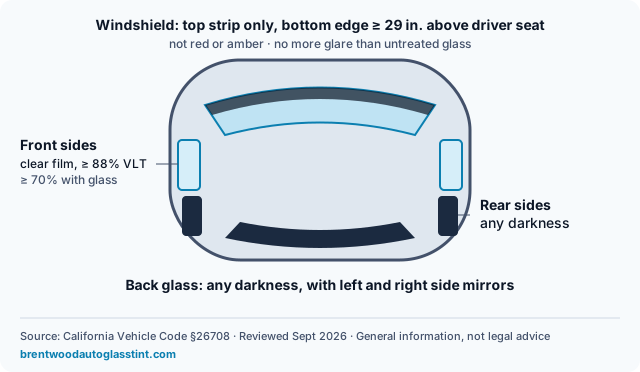
Embed code:
<a href="https://brentwoodautoglasstint.com/california-window-tint-laws/"><img src="https://brentwoodautoglasstint.com/california-tint-law-chart.svg" alt="California window tint laws by window (Vehicle Code 26708)" width="640" /></a>
<p>Chart: <a href="https://brentwoodautoglasstint.com/california-window-tint-laws/">California window tint laws</a> by Brentwood Auto Glass & Tint</p>
General information, not legal advice. Laws change, so check the current statute: California Vehicle Code §26708 and FMVSS 205 (49 CFR 571.205).
Want legal tint installed in Brentwood?
Call or send your vehicle details and a local provider will quote tint that meets these rules. See window tinting in Brentwood for film types.
Common questions
Is 35% tint legal in California?
On the rear side windows and back glass, yes; California sets no darkness limit there. On the front side windows, no: film there must be clear and colorless with at least 88% light transmission, and the glass and film together must still pass at least 70%.
Is 5% limo tint legal in California?
Only behind the driver: the rear side windows and the back glass. Tinting the back glass requires outside mirrors on both the left and right sides of the car.
Is the windshield '4-inch' rule the actual law?
No. The '4 inches' figure is shorthand used by many installers. Vehicle Code 26708(c) allows transparent material at the top of the windshield if its bottom edge is at least 29 inches above the undepressed driver's seat, it isn't red or amber, it has no opaque lettering, and it doesn't reflect glare more than the untreated windshield.
Do the rules differ for SUVs and trucks?
Section 26708 applies the same window rules regardless of body style. Many SUVs and trucks come with dark factory privacy glass behind the driver, which is legal.
Can police measure my tint?
Yes. Officers can use a tint meter, which reads light transmission through the glass and film together.
Does a medical exemption allow dark front windows?
Not permanently dark film. Section 26708(b)(10) allows sun-screening devices on the front side windows with a letter from a licensed physician and surgeon or a licensed optometrist, but they can't be used during darkness and the letter must be in the car or on the driver. Section 26708(e) separately allows clear UV-blocking film on any window with a dermatologist's certificate; that film still has to be clear, with at least 88% light transmission.
Related services and guides
- Window TintingLegal car window tint in Brentwood, CA: ceramic and carbon film, shades that pass California's 70% front-window rule, windshield strips and tint removal.
- Windshield TintWhat windshield tint is legal in California: the sun-strip rule (the 29-inch line, not "4 inches"), the AS-1 mark, and clear film. Brentwood, CA.
- Tint RemovalPurple, bubbling or too-dark tint removed in Brentwood, CA, including rear windows with defroster lines and fix-it ticket corrections.
- Ceramic TintCeramic vs carbon vs dyed tint for Brentwood's hot summers: IR rejection, TSER, no signal interference, and what ceramic film costs.